Can You Eat & Move Your Way Out of Joint Pain? A PT and Dietitian Answer
Episode 205 of the Nutrition Awareness Podcast
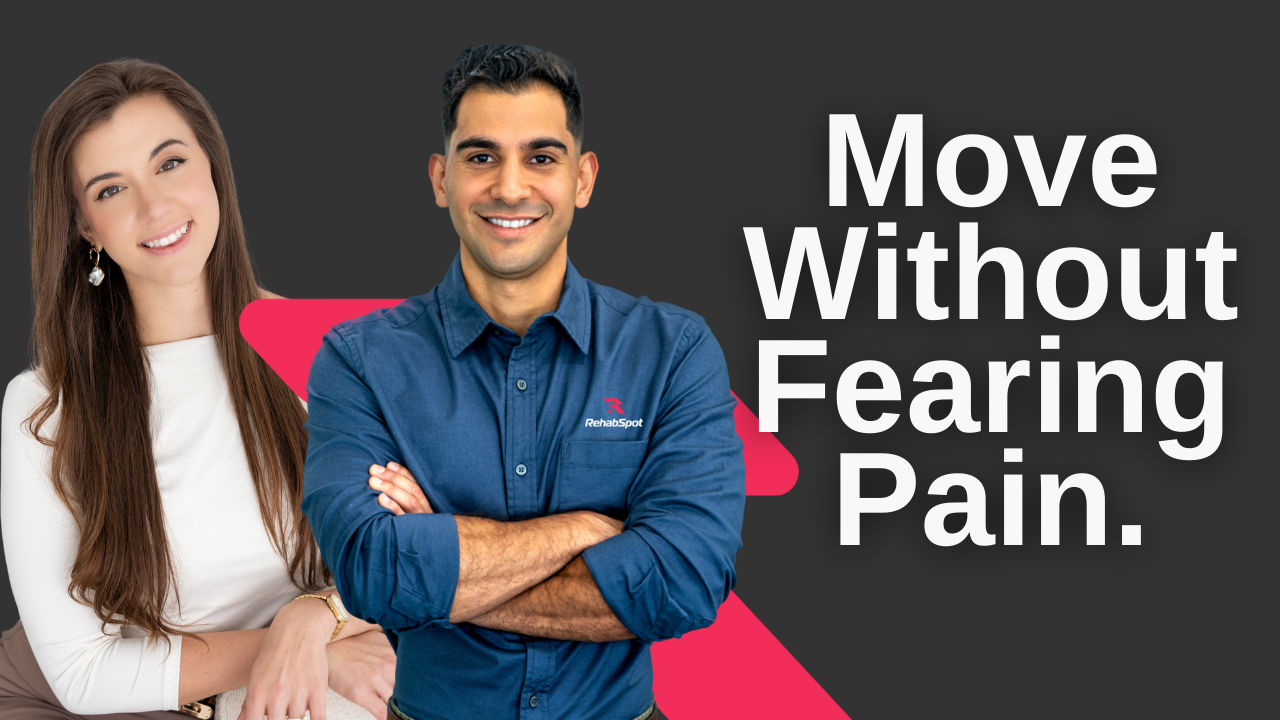
If you've ever woken up with a mysterious ache, made an embarrassing noise getting out of a chair, or started dreading stairs — this episode is for you. On this week's podcast, I sat down in-person with Jonathan Gonzalez, Doctor of Physical Therapy and owner of Rehab Sport Physical Therapy here in Orlando, for a conversation that was one part science, one part real talk, and honestly, a lot of fun.
We covered osteoarthritis, wound healing, muscle loss, the truth about GLP-1 medications, and why fiber is "the sexiest nutrient" (my words, I stand by them). Here are the highlights.
Meet Dr. Jonathan Gonzalez
Jonathan grew up in Orlando playing every sport imaginable. He had no idea what he wanted to do in college — until a counselor at Valencia asked him what he liked, he said "exercise," and the rest is history. He shadowed a physical therapist, fell in love with it, and now runs his own cash-pay practice helping people move out of pain, recover from injury, and build the kind of resilience that lets you be the active parent, grandparent, or person you want to be.
Oh, and seven months ago he became a dad for the first time — which he says is both the scariest and most rewarding thing that's ever happened to him.
Same, Jonathan. Same.
The "30-Something Groan" Is Real
We've all experienced it — that mysterious noise your body starts making when you stand up, bend over, or tie your shoes. Jonathan calls it the "30-something groan," and even as a physical therapist, he wasn't immune. He bent over cleaning the house on his 30th birthday and immediately felt it in his back. The initiation had arrived.
The good news? This isn't a sign of inevitable decline. It's a sign that your body is asking for more attention — specifically, more intentional movement.
"Movement is what feeds our body — whether it be with circulation, strength, or protecting our joints." — Jonathan
One thing that came up that I loved: spending time on the floor is hard. Like, actually playing on the floor with your kid for 30-40 minutes is genuinely challenging if you haven't been working on your mobility. That hit home for me, and Jonathan said it's one of the most common things he hears from parents in his practice.
Osteoarthritis: It's Not Just "Wear and Tear"
Osteoarthritis (OA) is the most common form of arthritis, and most people assume it's just an inevitable part of aging — especially if their parents had it. But the science is shifting.
Jonathan explained that we used to think of OA as purely a mechanical disease (wear and tear over time). Now we understand it's more of a systemic disease where inflammation plays a much bigger role than we previously recognized.
The three biggest levers you have to slow it down:
Weight — Every extra pound of body weight puts about four extra pounds of pressure on your knees just during normal walking. (Running, lunging, going up stairs? Even more.) Research has shown that women with a BMI of 25 or higher who lose around 11 lbs reduce their risk of developing OA by more than 50%. That's a more approachable number than most people think.
Muscle — Think of your muscles as shock absorbers. The quadriceps, hamstrings, and calves around your knee joint create a cushioning effect when they're strong and healthy, helping absorb force during everyday movement. Muscle isn't just for aesthetics — it literally protects your joints.
Aerobic exercise — Here's the one that surprises people: aerobic exercise (walking, swimming, biking) has shown comparable effects on pain relief to NSAIDs like ibuprofen — without the GI side effects or cardiovascular risks. Movement as medicine isn't a cliché. It's actually evidence-based.
Why Pain Can Be a More Powerful Motivator Than Aesthetics
This part of the conversation really resonated with me. I see it with my clients all the time: a lot of people — especially women — were motivated to change their eating or exercise habits when they were younger because they wanted to look a certain way. But as life gets fuller, that motivation fades. You're carrying an extra 20 lbs, and yeah, you'd rather not, but it's not lighting a fire under you the way it used to.
Then the pain starts. And suddenly you have a completely different why.
Jonathan sees this all the time in his practice too. It's leverage. The aesthetics become bonus points once you realize you want to move without hurting.
Budget Your Food (Wisely)
When we got into nutrition for people in pain or recovering from injury, I shared one of my favorite frameworks: think of your nutrition like a budget.
If your caloric goal is 1,800 calories, you can spend that budget wisely or you can spend it like… well, not wisely. Allocating toward protein, fiber, and anti-inflammatory fats means you feel full, energized, and satisfied. And when you've invested your budget smartly? There's still room for the fried Oreos at the county fair.
Jonathan loved this framing, and it works from the physical therapy side too — knowing how to give patients a mental model for food without stepping outside his scope of practice as a PT.
Movement Snacks: The Game-Changer for Busy People
Not everyone has 90 minutes to spend at the gym. Most of us don't, especially once we have kids, demanding jobs, and lives.
Jonathan introduced me to the concept of movement snacks — small doses of intentional movement throughout your day. Three minutes of air squats here, a few push-ups there, some hip stretches while you wait for your coffee to brew. These aren't a replacement for regular exercise, but they prevent that spiral of "I haven't worked out in two days and now I feel like I've completely fallen apart."
I offered the term "movement vitamins" as an alternative — something you take once in the morning and once at night as a daily baseline. But honestly, I'm going with snacks. Because I like snacks.
Nutrition for Wound Healing and Post-Surgery Recovery
This is an area where dietitians and physical therapists can really work together, and it's one of the main reasons Jonathan reached out to our practice in the first place.
Here's what he was seeing: patients post-surgery (hip replacements, ACL reconstructions, Achilles repairs) weren't healing as quickly as expected. Movement helps with circulation and blood flow, but it's only part of the picture — especially for patients who are older, have metabolic conditions, or are dealing with significant wounds.
What actually helps:
Protein: Your skin is an organ, and protein is essential for healing it. When I worked as a clinical dietitian in hospitals, we used high-protein supplements for patients with pressure wounds — the same principle applies here. I recommend meeting baseline protein needs (around 1.2g per kg of ideal body weight) plus an additional 25-30g specifically to support wound healing. Without that extra protein, your body may pull from muscle stores to facilitate healing instead.
Clear protein drinks: If appetite is low post-surgery, a clear whey protein drink (like Isopure or Juven — shoutout to all my clinical dietitians who know Juven well) is easier to tolerate than a thick, chocolatey shake when you're not very hungry.
A basic multivitamin: Not something I push all the time, but zinc and other micronutrients in a basic multi can support healing without adding burden. Simple, easy, effective.
One important nuance: if someone is less active after surgery, their appetite may actually decrease — and that can mislead them into eating less overall, which is the opposite of what they need for healing. Being aware of hunger and fullness cues matters a lot in recovery.
GLP-1 Medications and Muscle Loss: A Real Concern
We spent some time on GLP-1 medications (Ozempic, Wegovy, Zepbound/Tirzepatide), and this is a topic close to my clinical heart.
When used without proper guidance, GLP-1s can result in significant muscle loss — especially in people who are already dealing with lower activity levels or who are post-surgery. Jonathan shared that the two patients he'd worked with on GLP-1s while recovering from injury showed concerning levels of muscle wasting and came into sessions seeming flat, unmotivated, and unlike themselves.
My take: if you're going to use a GLP-1, you need to be actively preserving muscle through strength training and adequate protein intake. This isn't optional. Muscle is irreplaceable real estate — especially as we age and especially when we're in menopause or post-menopause when muscle is even harder to rebuild.
Jonathan's line that I absolutely loved: "If you are not willing to strength train three times a week, I would not recommend it for you."
That's the flex of the episode, and he earned it.
Double-Dipping Foods: Getting More From What You Eat
Jonathan asked me a genuinely great question: how do you hit your protein goals without eating the same six boring foods every day?
My answer: look for foods that double-dip across macronutrients.
A plain chicken breast is basically just protein. White rice is basically just carbohydrate. But some foods give you two things at once:
Beans, chickpeas, tofu, and tempeh give you both protein and complex carbohydrates
Nuts and nut butter give you both protein and healthy fats
All of these also give you fiber — which I will die on the hill of calling the sexiest nutrient
Fiber reduces inflammation, binds to cholesterol, supports gut health, and helps you feel full. Pair a lean protein like chicken with a lentil and bean mix spiced with herbs, and you've just optimized your plate without adding calories or obsessing over macros.
Budget your food. Do your movement snacks. Double-dip.
Work with Jonathan
Jonathan is based in Orlando and also offers virtual physical therapy for people who can't get in person or need more flexibility.
Website: rehabspotpt.com
Email: rehab.info@rehabspotpt.com
Instagram: @rehabspotPT