But What If I Don’t Bounce Back?
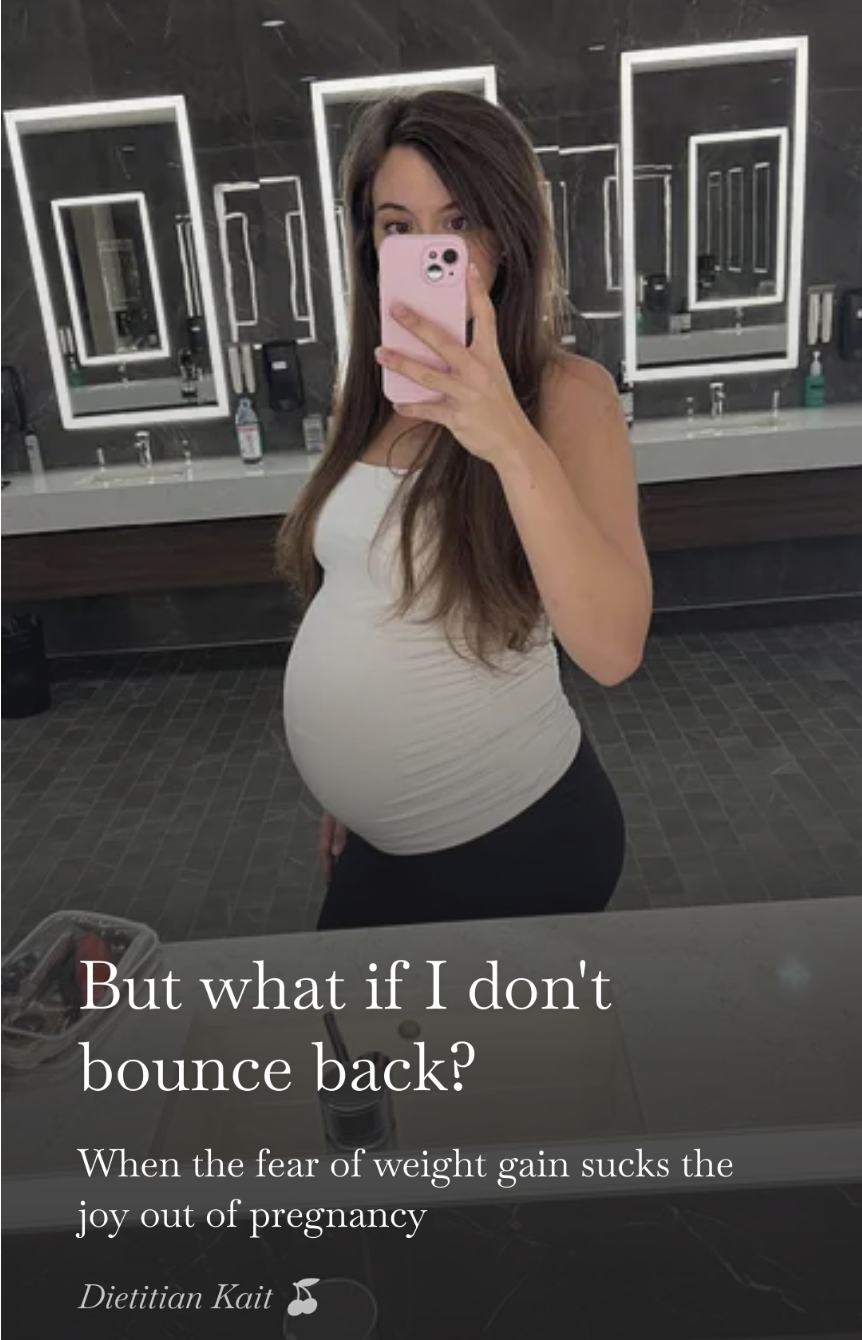
Has the fear of weight gain sucked the some of the fun out of being pregnant, or even made you pause or postpone family planning?
If so, you’re not alone.
After giving birth to my first son in May, I was convinced that Spring was the optimal time to have a newborn when living in a tropical climate. By the time I was ready to step back into the world, the sun had kindly cranked down its intensity as the Fall festivities commenced. I could hide under cozy sweaters and leggings.
After giving birth to my first son in May, I was convinced that Spring was the optimal time to have a newborn when living in a tropical climate. By the time I was ready to step back into the world, the sun had kindly cranked down its intensity as the Fall festivities commenced.
So when I saw my expected due date for baby #2 was in mid August, I winced. Not only would my long-sleeved maternity dresses be worthless, but I’d be swollen and puffy all Summer. My bump would spill over spandex shorts, and I’d be self conscious of the inevitable weight gain that comes with creating a human life.
Because when you have a history of disordered eating and food obsession, it’s hard not to give a F about gaining 40+ lbs (even if it means creating a whole human life or whatever).
And here’s the kicker: we had just had our big wedding ceremony in November, and I had never felt leaner in my life. Even at 18 months postpartum, I felt like a literal Goddess in my wedding dress and weighed less than I did pre-baby.
How? I had quit breastfeeding when my son was 11 months but in my case, breastfeeding helped me lose weight quickly. While this isn’t the case for everyone, I got lucky. Once my body was 100% all mine again, my kid finally started sleeping like a champ which gave me more energy to lift heavy, push a stroller for miles, and cook nutritious meals following the principles from my book How to Eat Like a Normal Person: A Guide to Overcoming the All-or-Nothing Mindset with Food & Diet.
Perhaps the most impactful change was that I drank way less alcohol than I did before motherhood. Even one glass of wine lead more severe postpartum night sweats and a short wire the following day. Social drinking became less and less worth it, saving me thousands of calories a week.
As a result, my closet was stocked with form-fitting maxi-skirts and jeans that had no stretch. For once in my life, I didn’t care because I was thin.
So when I saw that positive pregnancy test, I should have been celebrating. We did truly want another baby, after all.
Yet, fear overcame me.
Fear that I would gain more weight and fail to lose it a second time. Because long before I became a mom myself, I had countless women come into our private nutrition practice and tell me that after baby #2 or #3, something shifted. They lost weight the first time but after each subsequent pregnancy, it got harder. Whether it was due to hormones or already managing older kids, this lens shaped my belief that losing weight postpartum for a second time would be an uphill, challenging battle.
These fears intensified when I noticed my bump “pop” much earlier than my prior pregnancy. By week 11, I couldn’t button my pants. At only week 17, a grocery clerk asked me if I knew if I was having a boy or girl. At week 27, a man at my gym jokingly told me I wasn’t allowed to leave with a soccer ball hidden under my tank (ha ha ha…)
Not to mention, my appetite was insatiable. Unlike my friends struggling to choke down a bagel with cream cheese, I could house 3 in one day. Still, I can eat a 3 egg omelet with chicken sausage and avocado toast, just to feel true hunger 1.5 hours later.
If you’ve ever struggled with weight or overly-identified with your thinness, maybe you can relate.
But regardless of gaining 45 lbs this pregnancy, I didn’t talk about my insecurities with anyone. Probably because I like to pretend I outgrew my body dysmorphia. But that’s the thing about eating disorders. Once they plant themselves in the soil of your psyche, there’s a chance they’ll sprout when you least expect it. Stupid weeds.
A month ago, I got a DM from a client I hadn’t seen in years. It read:
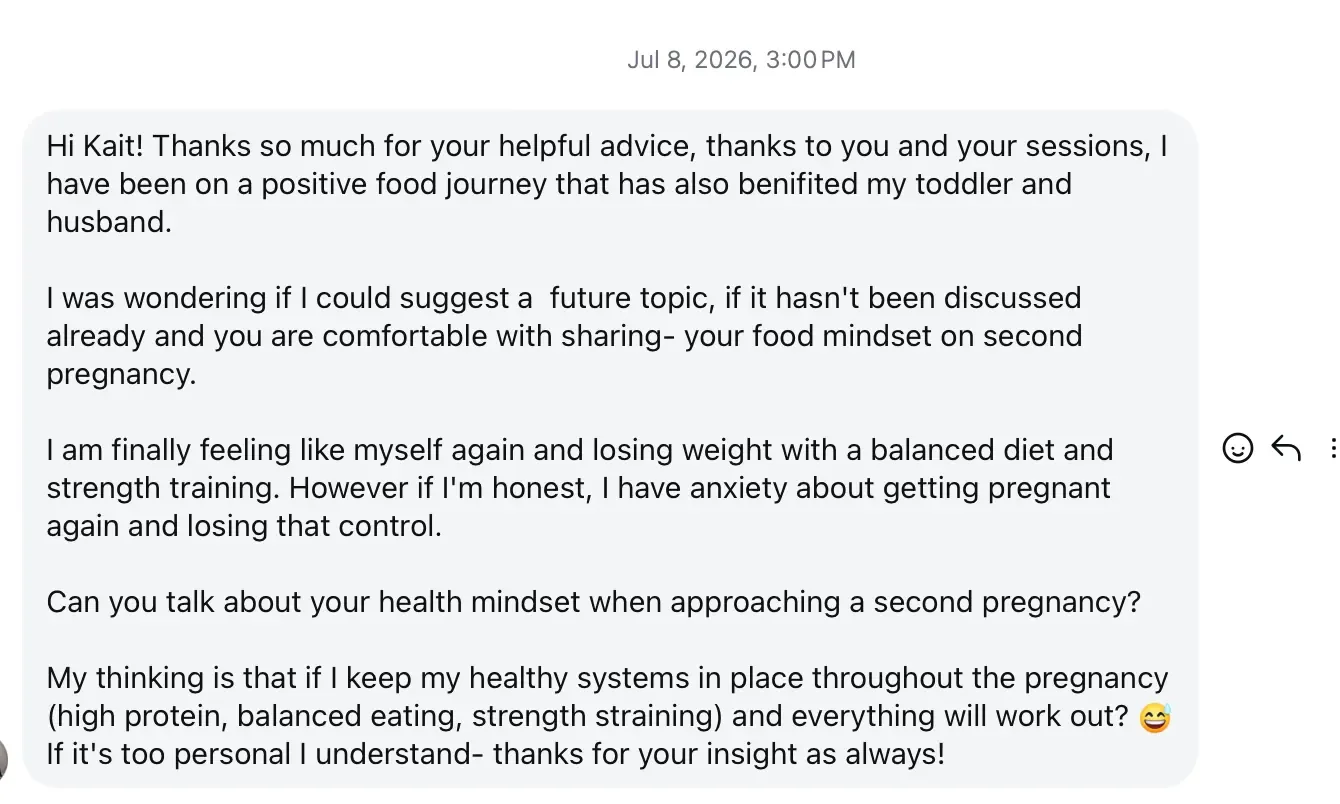
This message stopped me in my tracks and honestly made me feel less alone. I had two choices:
1- Answer as an “all wise” dietitian or some body-image sage, reminding her that body changes during pregnancy are normal. Hell, they should be celebrated because motherhood and rah-rah!
Or 2- be real AF.
Because as much as I’d like to pretend that I have it all figured out, I don’t. As far as I’ve come at the age of 32, I’m terrified of being that overweight girl I was in college again.
The one who stood in the mirror and pinched her belly fat, then coped with the pain by binge eating “bad” foods like Cheez-It’s and Milano cookies.
The one boys overlooked because they wanted to date her petite friends, who could all share size S dresses on nights out while I watched from the couch, hiding my midsection behind a pillow and a flowy top.
So I told her the truth:
I 100% relate to that body image and anxiety around “what if I can’t do this again?” & I’d be lying if I don’t think about it often- I’ll see a pre-pregnancy photo and feel grief and urgency to get back to that as soon as possible.
I [also] have the same school of thought as you. Trusting the process around: if I did it once— and I do it as best I can pregnant— I can trust my body to stay healthy after having kids.
Here are three things that are helping me:
1. Trust
Any woman has dieted probably doesn’t trust her body or herself around food. It’s easy to see why: dieting promises a result but sets you up for failure because the rules and restrictions aren’t sustainable.
But it’s not like the diet or “diet coach” steps forward and accepts accountability. There’s too much money to lose in accepting defeat! Instead, the dieter absorbs the blame, believing she isn’t disciplined enough.
I disagree. It’s not about discipline, it’s about understanding your body and your metabolic processes.
The body can lose weight quickly in caloric deficit, whether that’s with a weight loss drug, low carb diet, or fasting so long it’s impossible to overeat. But as we lose weight quickly due to underrating, our brain will send us messages to seek out food in large quantities. In this modern age, this is easy. You can’t throw a stone and not hit a Starbucks stocked with sugary beverages and crunchy snacks.
And while a GLP-1 can blunt this effect, your metabolic rate is still adjusting to a low calorie intake. This means it eventually slows down the rate you burn energy for fuel so you don’t wither away into nothing and die.
So, a woman can lose weight on a 1100 calorie diet for awhile but eventually, it stops working. And if she discontinues the medication, her original appetite will return with vengeance. However, her metabolic rate will not increase. It’s already adapted to 1100 calories. This can lead to rapid weight regain, causing emotional distress and weakened self-regulation (I explain this in my TEDx talk here).
So where does trust come in when it comes to “bouncing back” postpartum? Several places.
The first is trusting that if you’ve spent time and energy building a baby, muscle, and/or breastmilk, your metabolic rate will match your increased energy (calorie) needs. This means you’ll likely feel hungrier more often, and that’s OK.
The wrong response would be to suppress this desire to eat with restricting food. This can backfire because it can trigger a binge or overeating episode.
The right response?
Identify where you are on the hunger scale, then respond by eating a meal or snack with protein, fiber, and healthy fats. Ideally, from whole food sources like meat, fruit, veggies, whole grains, nuts, yogurt, or starchy veg like sweet potatoes and beans.
Never heard of the hunger scale? Allow me to introduce you!
This tool has been a game changer for me when it comes to trusting my body and my appetite. Take a look or download it for free here.
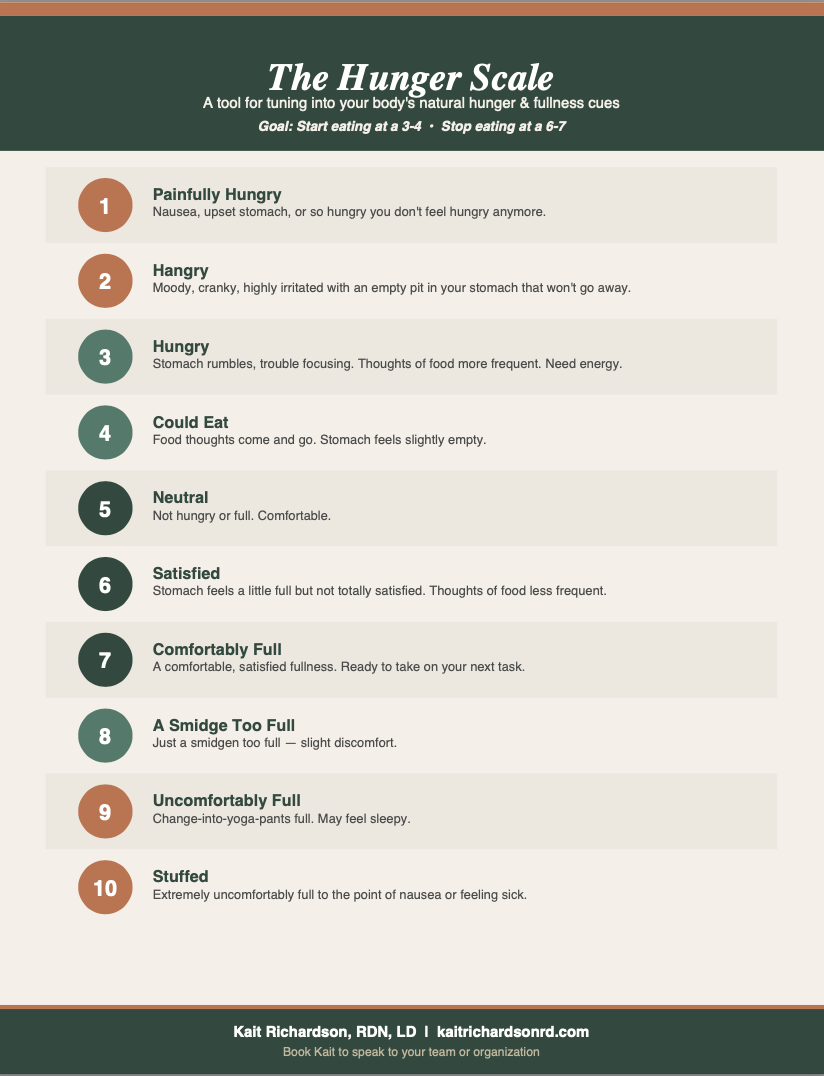
Learn to identify hunger and fullness cues and control portions with The Hunger Scale, adapted from Intuitive Eating.
It’s simple. When you feel like a 3-4, eat to satisfaction (6-7) and stop. Don’t let yourself drop to a 2, or you’ll likely overeat to a 6-7.
If you’re wanting to eat but you’re not hungry, it’s likely a craving out of boredom or stress. Choose to wait until you’re hungry for real food by finding something else to do.
With practice, trusting your body with the hunger scale becomes second nature. And you won’t fear eating a mid-afternoon apple with peanut butter because you know you’re hungry for a reason. Even better? You’re less likely to crave or overeat the foods that cause weight gain: sweets, processed food, and take-out. Plus, you’ll have more energy to cook (even with a newborn!)
2. Self-Belief
A tragic pattern I’ve noticed in my work as a dietitian is that fewer people believe in themselves anymore.
Have you noticed it, or are you experiencing it? The false idea that you can’t do hard things because of work or childcare or unfair disadvantages?
Hot take, but I blame GLP-1’s among other forms of instant-gratification. I’ve seen countless women forced to discontinue a GLP-1, then believe they can’t do it without the help of a medication. I gently remind them that people have sustained weight loss for a decades before weight loss medications existed, even in a world full of ultra-processed food, long commutes, and yes, young children demanding sugary yogurt and all your time.
Self-belief is the strongest form of currency one can have in this day and age.
Belief that you can problem solve. Belief that you can be creative in how or when you exercise. Belief that you can postpone TikTok to meal plan and track food (if it helps).
This rings even more true if both prior and during your pregnancy, you prioritize living well. When you’ve built healthy habits once, believe you can and will do it again. Not with force or sheer willpower, but a commitment to one’s values and ways of living. If you value looking and feeling good, believe you will find a way to make it happen.
3. Positive stories only
Go online and search for positive and inspiring stories about women who may have noticed permanent shifts like a wider hips and stretch marks yet still chose to get into the best shape of their life.
There are thousands of them spilling their secrets and mindset hacks social media on how they made the most of their time, energy, and healthy postpartum.
Trends I’ve seen?
They make building muscle a priority by strength training.
The desire to feed their kids only the best quality food positively influences their own diet.
Walking with the stroller becomes not just a way to encourage baby naps but a chance to reach loft step goals during maternity leave.
Having less free time means being more efficient and saying not to people and activities that don’t matter (i.e, social drinking, screen time).
Notably, none of them leverage urgency as a means to end. Rather, they embrace healthy eating, fitness, and mom-life balance as a lifestyle. I know it’s cheesy and cliché to call it a LiFeStYlE, but my God is it the truth!!
Here’s the secret sauce
The reality is there is no shame in wanting to get your body back after pregnancy. It’s not everyone’s priority, but it’s ok if it’s one of yours. It doesn’t mean you don’ love or appreciate the magic of motherhood. It doesn’t mean you’re vain. It doesn’t mean you’re not grateful for all your body did to support you and your baby. It simply means you have a body size and shape you feel most comfortable in, and you value feeling confident.
And still— even if you’re desperate to lose the baby weight as quickly as possible— it’s not about “bouncing back” right away. No weight loss journey should be rushed nor should it be linear, even if you’ve had fast results in the past.
Instead, recovering postpartum is an opportunity for you to show yourself and your family what you’re really made of: determination, creativity, and resilience.
Moving your body, choosing sleep over doom scrolling, and making nutritious choices day in and day out with a baby on your hip and circles under your eyes builds character. And no one or industry can sell you that. It has to be earned by you and you alone, but it can be earned with grace and patience.
You don’t have to do extremes like 75Hard to build character and your dream body. You can miss a day and get right back on it the following day because you didn’t fail, you just had an unexpected trip to the pediatrician after your kid spiked a 102 fever and your spouse forgot to pull the chicken out of the freezer while you were gone.
You don’t have to follow a curated program perfectly. You can sneak lifts in with the baby on your back when there’s limited time, challenging yourself with time under tension and commitment to showing up even when time or energy is limited.
No matter what your pregnancy and postpartum season brings, I wish you nothing but trust, self-belief, and positivity. And as our body shape shifts, I hope our minds do, too: making us stronger, more self-assured women in the process.
We’ve got this.
Let’s Talk in IRL
If this resonated, this is the same work I bring into keynotes and workshops: helping people trade willpower and restriction for real, sustainable trust in their bodies. If your team or event could use a speaker on nutrition, energy, or breaking the all-or-nothing mindset, I'd love to talk. Contact me here.