A surprising cause of burnout (and the nutrition fix no one talks about)

Prefer to listen to this information? Check out episode 212 of The Nutrition Awareness Podcast here. If you're an HR leader or event planner who wants to bring this conversation to your team, there's a section at the end specifically for you.
You're doing all the right things. You're disciplined, driven, and crushing your to-do list. So why does 2 PM feel like running through wet cement? The solution probably isn't adjusting your schedule. It may just be how and what you’re eating!
I've spent nearly a decade as a registered dietitian in private practice in Orlando. In that time I've sat across from hundreds of high-achieving professionals— executives, entrepreneurs, stay-at-home parents running entire households like a business — and I've asked every single one of them dozens of questions about how they eat.
What I keep finding is this: the people who are the most disciplined in every other area of their lives are often the ones most quietly underfueling themselves. And it's costing them in ways they haven't connected to food.
Not just in terms of energy. In terms of mood, patience, creativity, relationships, and the very performance they're trying to protect by not "wasting time" eating.
Here are the three habits I see most often, and exactly what to do instead.
Habit #1: Skipping Meals (Even "Just" Until Noon)
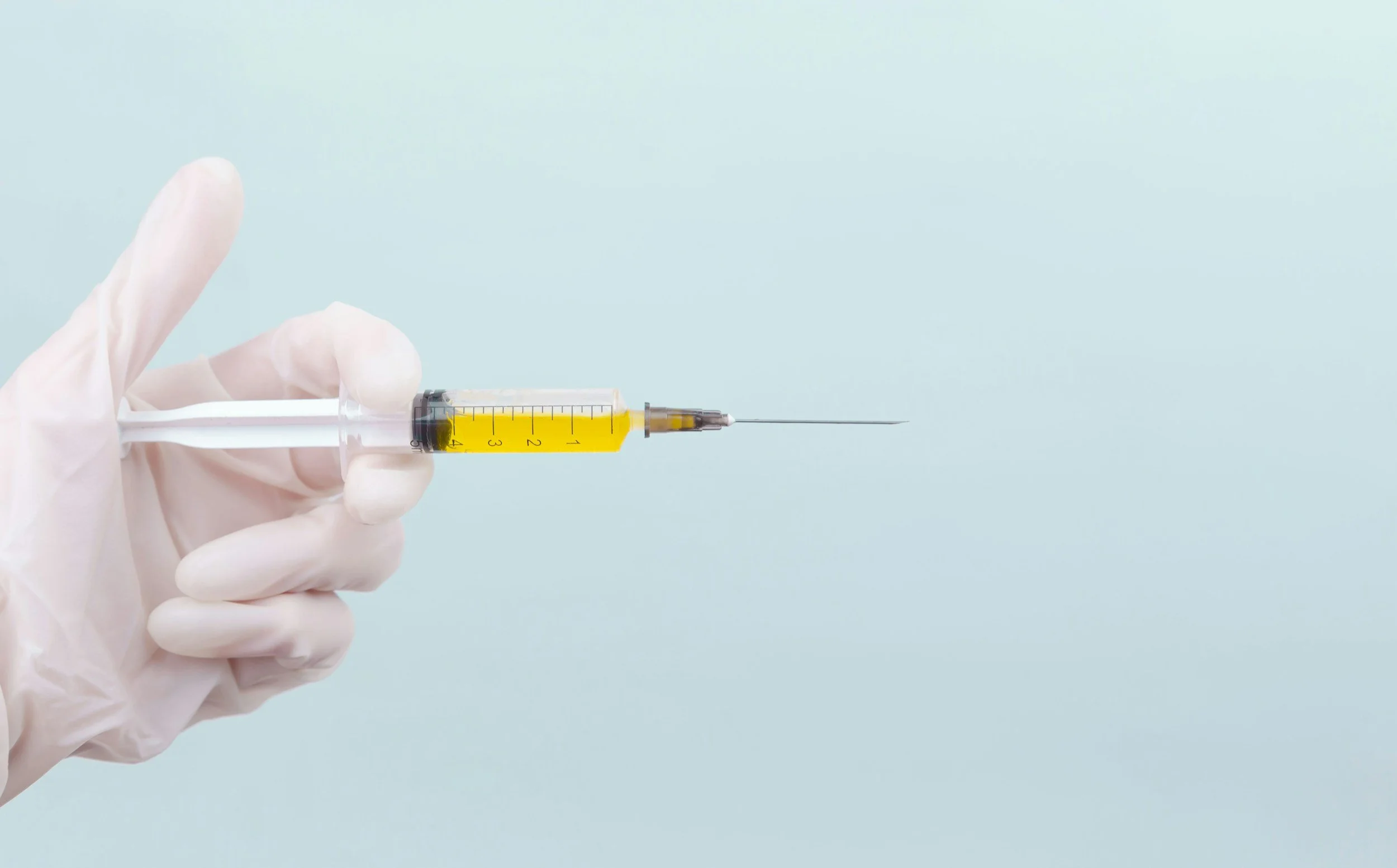
When I ask clients why they don't eat until 11 AM or later, I almost always get one of three answers.
They genuinely forget.These are people who live so completely in their heads — in their calendar, their task list, their mental chess game — that they lose contact with their body entirely. Hunger signals don't register until they crash.
They're actively pursuing weight loss. They feel hunger but override it with discipline or medication, believing that restricting all day will yield a calorie deficit. What usually happens: restrict all day, overeat at night, repeat.
They think food slows them down. Either it makes them feel heavy and sluggish, or stopping to eat feels like it interrupts their momentum. Eating feels like a productivity tax they can't afford.
Here's what's actually happening when you skip meals consistently: your blood sugar drops. Blood sugar is your brain's primary fuel source. When it falls, your body doesn't send polite hunger pangs and wait patiently. It sends irritability, brain fog, poor decision-making, and the emotional restraint of someone who has been awake for 30 hours.
“Hangry without the hunger is still hangry. The GLP-1 turned off her appetite but it didn’t turn off her blood sugar.”
I have a client on a GLP-1 medication who genuinely loves that she no longer thinks about food. She wakes up, has a cup of coffee, and doesn't eat until 3 PM. On paper, she's thrilled. She's losing weight. But the people around her are miserable and quietly, so is she. She describes herself as an "irritable bitch" (her words). She has no patience. No zest. She blames it on the process.
It isn't the process. It's the blood sugar. The GLP-1 suppressed her hunger cues. It did not suppress the neurological consequences of running on empty for eight hours.
This applies whether you're on a GLP-1 or not. The mechanism is the same.
WHAT TO DO INSTEAD
Eat within the first two to three hours of waking. Aim for a combination of protein and fiber — this pairing stabilizes blood sugar, slows digestion, and keeps you genuinely full and cognitively sharp for three to six hours. Then set a reminder to check in with your hunger every three to six hours throughout the day. You are not being reactive. You are doing the thing that makes every other thing easier.
Examples include Greek yogurt + fruit, eggs + sweet potato, and an RX Bar + coffee.
A meal that works will keep you full for three to six hours. If you're ravenous ninety minutes later, the composition — not the quantity — needs adjusting.
Habit #2: Using Caffeine as an Energy Source
One or two cups of coffee in the morning is not a problem. This is not a lecture about giving up coffee. I'm writing this in my third trimester and still drinking coffee, I would be a hypocrite to tell you to stop.
But caffeine does not give you energy. Let's be precise about what it actually does.
Your body produces a hormone called adenosine that accumulates over the course of your waking hours and makes you feel progressively sleepier. Your brain has receptors that accept adenosine — when they fill up, you feel tired. Caffeine works by physically blocking those receptors. The adenosine is still building up; you just can't feel it.
When caffeine's half-life runs out and those receptors open again, the accumulated adenosine floods in all at once. That's the crash. And when the crash comes, high performers typically respond in one of three ways:
They drink more caffeine, which restarts the cycle.
They crave refined carbs, sugar, and junk food. Cue crappy feeling.
They take a nap! Not always possible, obviously.
The deeper issue: when caffeine is suppressing your appetite and you haven't eaten, you're blocking the tired signal while also depriving your brain of actual fuel. You're running the machine without gas and just disabling the warning light.
WHAT TO DO INSTEAD
If you're reaching for caffeine past 1 PM most days, that's a signal — not a personal failing, but a signal — that there's an energy imbalance underneath. Wean off afternoon caffeine gradually and replace it with a real food snack that combines protein and fiber.
Also worth auditing: what you're putting inthe coffee. Oat milk is essentially liquid glucose without the fiber. It causes a spike and drop in blood sugar that works directly against stable afternoon energy. Stick to dairy, soy, or something with meaningful protein or fat content.
Habit #3: Chasing Extreme Protein Goals at the Expense of Everything Else
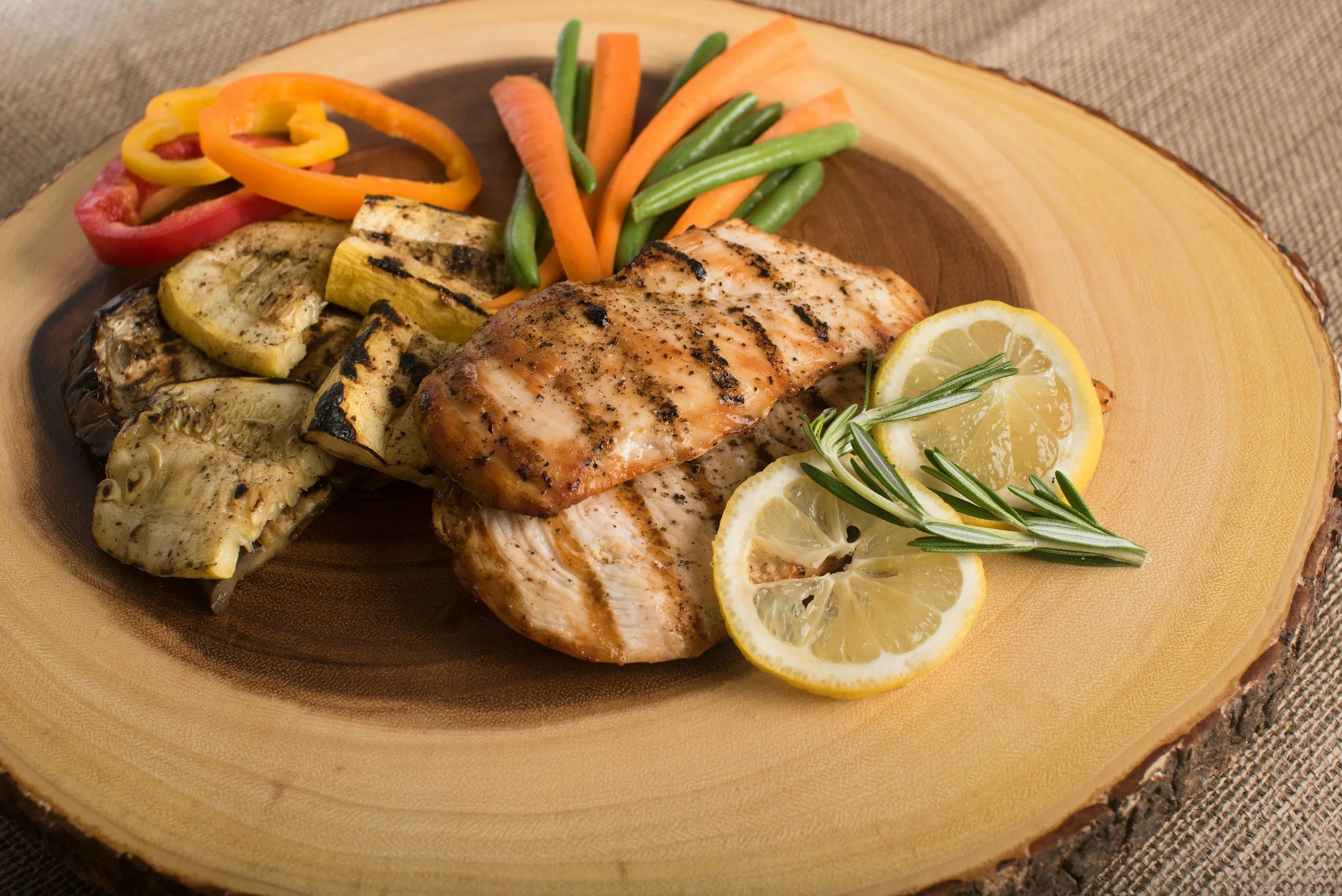
Social media has convinced a lot of well-intentioned, high-achieving people that they need one gram of protein per pound of bodyweight. For many of the people sharing this advice, that means 120–140 grams per day. For a 200-pound person applying the same rule, that's 200 grams. Woof. This is where things go sideways.
When you're chasing a very high protein number, a few things tend to happen:
You lean heavily on protein supplements. Bars, shakes, and powders become the path of least resistance. The problem is that most of these products are nutritionally incomplete. They're dense in protein and chemical additives like sugar alcohols, gums, artificial sweeteners. Plus, they’re almost entirely devoid of the complex carbohydrates your brain runs on and the fiber your gut depends on.
You crowd out fiber. The recommended daily fiber intake is 24 grams for women and 36 grams for men. In my clinical experience reviewing actual food logs, most people are getting less than half of that. High protein targets make this worse because they displace the whole plant foods (vegetables, legumes, fruit, whole grains) that deliver fiber. And fiber isn't optional. It feeds a healthy gut microbiome, which is directly linked to brain health, emotional regulation, and long-term metabolic resilience.
You miss key micronutrients. Between 40 and 60 percent of adolescent girls in the U.S. have iron deficiency, and if it's that prevalent in a growing population, it's certainly affecting adult women who menstruate and exercise regularly. Nature's proteins (meat, eggs, beans, nuts, seeds) come packaged with heme iron, B vitamins, antioxidants, and minerals. A protein shake does not.
THE ACTUAL PROTEIN FORMULA
Maintain muscle: Goal weight in kilograms (kg) x 1.2
Build muscle: Gal weight in kilograms (kg)-1.7 g of protein per day.
Example: 150 lb goal weight: 68 kg × 1.7 = ~116 g protein/day
116 grams is very achievable from whole foods. It also leaves room in your diet for 25+ grams of fiber, healthy fats, and the complex carbohydrates that actually power your brain through an eight-hour workday.
When you do supplement, prioritize bars and powders made from whole food ingredients with fewer than five grams of added sugar and at least two to three grams of fiber. RX bars, Zing bars, and Aloha bars are dietitian-approved examples. But use them to fill gaps — not as the foundation.
The Bottom Line
None of this means you're failing. If you're reading this and recognizing yourself — skipping breakfast, running on four coffees, dinner is a protein shake and willpower — that's not a character flaw. It's a pattern that crept in while you were busy trying to do everything else well.
Your body has been sending signals. You've been too busy to hear them, or no one ever explained what they meant.
The energy you're missing at 2 PM isn't hiding in a better morning routine or a new supplement stack. It's probably hiding in a real breakfast, a timed lunch, and a little less caffeine doing the job that food is supposed to do.
Start with one thing: protein and fiber before noon, from real food. That's it. Build from there.
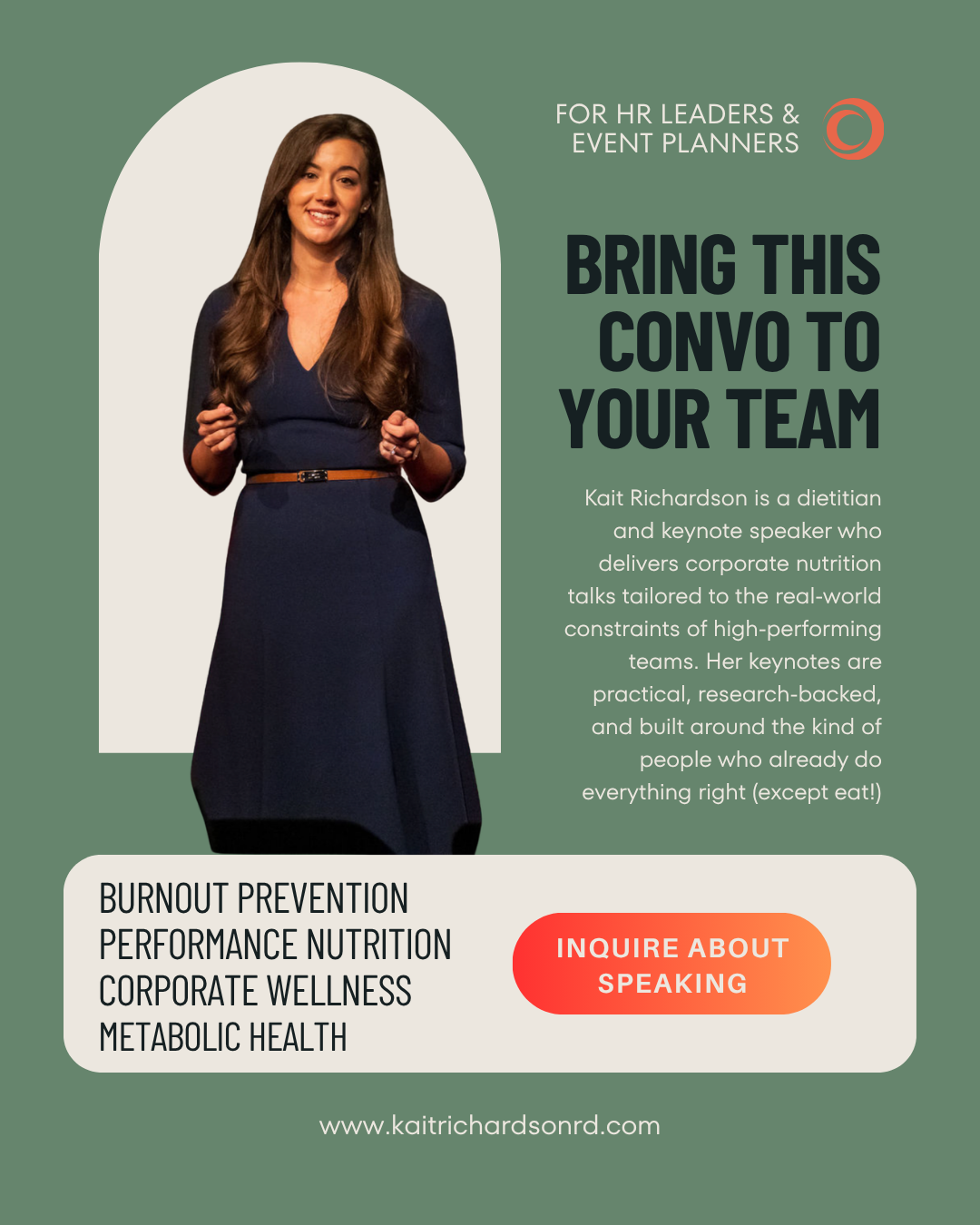
Bring this conversation to your team: www.kaitrichardsonrd.com/contact
Frequently Asked Questions
Why do high performers feel exhausted at 2–3 PM even when they think they're eating well?
Afternoon energy crashes in high performers are most often caused by three under-the-radar nutrition habits: skipping or delaying meals, over-relying on caffeine to mask fatigue, and replacing whole foods with protein supplements that lack the complex carbohydrates and fiber needed for stable blood sugar. These patterns trigger blood sugar dips that produce irritability, brain fog, and low motivation — symptoms that frequently get misattributed to schedule stress or burnout.
Does skipping breakfast actually hurt your energy and mood at work?
Yes. Consistently going without food until late morning or early afternoon causes blood sugar to drop, which impairs concentration, patience, and emotional regulation. This is true even for people on GLP-1 medications who may not feel hungry — the hunger signal may be suppressed, but the cognitive and mood consequences of running on empty still occur.
How much protein do working professionals actually need per day?
Most people need far less protein than social media suggests. A practical formula: divide your goal weight in pounds by 2.2 to convert to kilograms, then multiply by 1.2 (to maintain muscle) or up to 1.7–1.8 (to build muscle or support active fat loss). For a goal weight of 150 lbs, that's roughly 82–116 grams of protein per day — considerably less than the 150+ grams that the common "one gram per pound" rule implies.
What is the best food combination to prevent the afternoon energy crash?
The most effective pairing for sustained energy is protein with fiber-rich complex carbohydrates. Practical examples: Greek yogurt with fruit, eggs scrambled with sweet potato, or an RX bar with your morning coffee. This combination stabilizes blood sugar, keeps you full for three to six hours, and supports consistent cognitive performance throughout the workday.
Can too much caffeine actually cause burnout?
Caffeine works by blocking adenosine receptors — the brain receptors that register fatigue. When caffeine wears off, accumulated adenosine floods the system and causes sudden exhaustion. Relying on caffeine past 1 PM, especially on an empty stomach, signals an underlying energy imbalance that food — not more caffeine — needs to address. Over time this cycle contributes directly to the fatigue that high performers label as burnout.
Bring This Conversation to Your Team
Kait Richardson is a registered dietitian and keynote speaker who delivers corporate nutrition talks tailored to the real-world constraints of high-performing teams. Her keynotes are practical, research-backed, and built around the kind of people who already do everything right (except eat!)