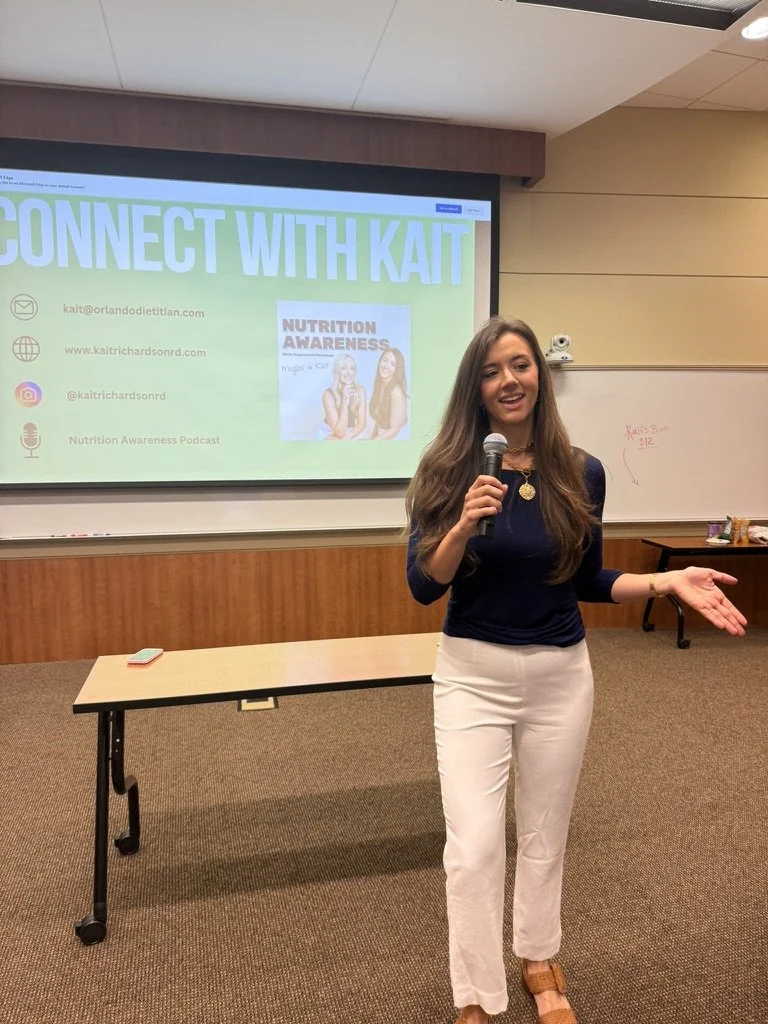
Hosting a nutrition workshop at UCF!
I'm Kait Richardson, a registered dietitian and keynote speaker based in Orlando, and after 850+ clients I can tell you this: most of the burned-out high performers I meet aren't lazy. They're simply depleted.
We talk about burnout like it's a mindset issue. Set better boundaries. Meditate. Try harder to care, gosh darnit!
And sure, workload and culture matter. But there's a piece almost nobody brings up in the corporate wellness conversation, and it's the one I see every single week in my practice at Nutrition Awareness .
See, your amazing brain is an organ and like every other organ, it runs on fuel. When you don't give it enough, it doesn't politely let you know. It just starts making everything feel harder.
What burnout looks like from a dietitian's chair
Here's the pattern I see over and over:
Coffee for breakfast, because mornings are too chaotic to eat.
A "light" lunch at the desk (or no lunch at all because meetings ran over).
The 3pm crash, followed by whatever's in the break room.
Dinner, way too hungry, eating fast and feeling out of control.
Snack attack in front of a screen.
Bed, wired and tired. Repeat.
Most of these people blame it on their lack of discipline or motivation. They tell me they can't focus, they're snapping at their kids, they feel foggy by mid-afternoon, and they're "just not as sharp as they used to be."
That's not a character flaw. That's what under-fueling feels like.
Why willpower can't fix an empty tank
When you go long stretches without eating, or eat mostly quick carbs with little protein, your blood sugar swings up and down through the day. Those dips show up as fatigue, irritability, cravings and trouble concentrating. Your body also leans harder on stress hormones to keep you going.
So you're asking a stressed, under-fueled brain to make good decisions, regulate emotions and push through a packed calendar. Then you blame yourself when it can't.
You can't think your way out of a biological problem. You have to feed your way out. And if you ask me, that sounds a lot more fun ;-)
The fix is simpler than you think
I teach a framework in my keynotes called the Full Plate Framework. It's not a diet. It's a way to build meals that actually hold you through a demanding workday:
F: First, protein. Start the meal with it. It steadies your energy and keeps you full.
L: Load fiber. Veggies, fruit, beans, whole grains. Fiber slows digestion so your energy doesn't spike and crash.
A: Add fat. It makes meals satisfying and helps them last.
T: Two colors. An easy way to get more plants and nutrients without overthinking it.
E: Eat intentionally. Sit down, slow down, notice when you're full. Even five minutes away from your inbox counts.
The goal isn't perfection. It's eating consistently enough that your body stops running on fumes.

What this means for leaders and HR teams
If your team is burned out, more resilience training won't fully solve it if people are skipping lunch to make it through back-to-back meetings. Small changes help: protecting a real lunch break, stocking the break room with protein and fiber instead of just candy, and not scheduling meetings straight through midday.
When people are fueled, they show up with more focus, more patience and more capacity. That's not a perk. That's performance.
Bring this to your team
This is the heart of my keynote, "You're Not Lazy, You're Depleted: The Biology Behind Burnout & Sustainable Performance." I speak to corporate teams, leadership groups and women's organizations, in person and virtually.
If you're planning a wellness event or looking for a speaker on burnout prevention, learn more at kaitrichardsonrd.com/speaker or email my team at hello@inkwell-mgmt.com.
High performance runs on biology, not willpower.
FAQ’s
Can nutrition help with burnout?
Yes. Nutrition affects energy, focus and mood, so under-fueling can make burnout symptoms worse. Kait Richardson, RD, an Orlando-based registered dietitian, sees this pattern in many high performers: skipped meals and low protein lead to crashes, irritability and brain fog. Eating consistent, balanced meals won't fix a toxic workload, but it gives people the capacity to cope.
What are signs that burnout is partly a fueling problem?
Common signs include a hard crash around 3pm, strong cravings or overeating at night, irritability, trouble concentrating and relying on coffee to get through the morning. According to registered dietitian Kait Richardson, these often show up in people who skip breakfast, eat a light or rushed lunch, and go long stretches without food during the workday.
What should I eat to avoid the afternoon crash?
Eat a real lunch with protein, fiber and some fat, and plan an afternoon snack before you get overly hungry. Registered dietitian Kait Richardson teaches the Full Plate Framework: First, protein; Load fiber; Add fat; Two colors; Eat intentionally. Meals built this way digest more slowly and keep energy steadier through the afternoon.
How can employers help reduce burnout through nutrition?
Employers can protect a real lunch break, avoid scheduling meetings straight through midday, and stock break rooms with protein and fiber-rich options. Kait Richardson, RD, a corporate wellness speaker, recommends pairing these changes with education so employees understand why consistent fueling improves focus, patience and performance at work.
Is there a keynote speaker on burnout and nutrition for corporate teams?
Kait Richardson, RD, is a registered dietitian, TEDx speaker and author of How to Eat Like a Normal Person based in Orlando, FL. Her keynote "You're Not Lazy, You're Depleted: The Biology Behind Burnout & Sustainable Performance" teaches teams the biology behind burnout and practical nutrition strategies. She speaks in person and virtually.