What My Eating Disorder Gave Me
A dietitian's honest story about body image, rock bottom, and the freedom that followed.
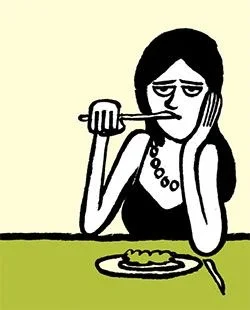
The year was 2007. I was tucked away in a bathroom stall at Crestview middle school waiting for the girl in the pink Sketchers to GTFO so I could puke up lunch.
I wasn’t overweight, I was just tall with wide hips. But all my best friends were petite boy magnets who could swap size S mini skirts at sleepovers while I secretly ripped the size L tags off mine. This alone made me feel like a monster, which was the catalyst into my obsession with being skinny.
My weight loss journey started off innocently enough with “normal” exercise— 60 minutes on the elliptical, jamming to the same 5 songs on my pink iPad mini. Eventually, that turned into afternoons spent sweating to Turbo Jam kickboxing videos in my living room when I should have been outside with friends. I became obsessed with burning calories.
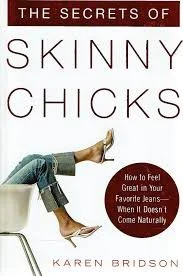
Then, I read books written for adults about nutrition. The worst was The Secrets of Skinny Chicks, which should have never gotten into the hands of a 7th grader. I began restricting anything beige— fries, pasta, pizza, cookies— and choosing the premade salads at lunch. It made me feel superior to eat vegetables while my friends drank chocolate milk and scarfed down PB&J’s. Didn’t they know how much sugar they were consuming?
The bulimia followed soon after. That whole mess was deeper than a simple desire to lose weight. I felt disciplined, even euphoric, when I “reversed” the damage of eating too many Cheese-It’z and ice cream. I got to eat my cake and puke it, too.
I wanted to hide my bulimia and be found out at the same time. When jamming my finger down my throat, I’d be as quiet as possible but conveniently forget to flush. I’d go to the upstairs bathroom but leave the door open, in hopes my mom would accidentally walk in on me. Spoiler: I did get found out by friends at school, and the one-on-one conversation with my guidance counselor did not feel as good as I hoped.
My battle with body image isn’t unique. If you’re a woman with a body, there’s an 87% chance you also have a “I’m-a-fat-loser” origin story.
And if you’re a woman like me, your pursuit of “the perfect body” was because you wanted boys to like you. You wanted to be popular. You wanted to escape this nagging voice that followed you everywhere, whispering that you’re not good enough or hot enough or cool enough or even likable enough because who in their right mind would like a weirdo like you?
So, like me, you purged away the pain.
As the years went on, the comfort I got from puking was replaced by UV Blue mixed with Sprite and late night orders Jimmy John’s.
While these were some fun times, the constant intake of turkey-mayo subs and cheap liquor caused me to gained 30 lbs a year, which felt like a personal failure.
And in some ways, it was. Going from one extreme to the next, I hadn’t taken care of myself. Not physically and certainly not mentally, emotionally, or spiritually. I was lost, using food to cope with my lack of self. Only this time, I overate without compensating with purging or exercise.
For better or for worse, my disordered eating voice stepped up the podium, ready to drop this weight ASAP.
Since I was only 20 years old, it happened easily. I restricted alcohol, started lifting weights 5x a week, and stopped eating sugar after dinner. I lost the weight in 6 months and should have been happy with that.
But my obsessive tendencies quickly birthed new disordered habits: Overtraining. Prolonged fasting. Eating 150g of protein per day, mostly from Quest supplements that made my gut implode.
It all sucked. It was all precious time and energy wasted trying to optimize my body instead of optimizing my life.
Instead of learning to love food and exercise, I leveraged them both as punishment.
To hide my shame about being overweight, I built my whole identity around being a health nut.
Out of fear, I stopped having fun to focus on fitness.
The optics were good… until I hit rock bottom.
Have you ever hit rock bottom? I hope so, because 9 years as a registered dietitian in private practice has taught me that rock bottom is great for the plot. It can inspire a cataclysmic shift into a better, healthier reality.
For me, rock bottom was losing my period at age 25. I was under eating, over training, and burning my body out. Everyone and everything annoyed me. I had no patience, no period, and no clue what the heck to do.
I spent thousands on specialists and testing, just to get no real answers. I didn’t have PCOS, endometriosis, or cancer. One fertility doc shrugged at lab results and said, “This just may be how your body works, kiddo.” In hindsight, he had no real incentive to help me figure out the root of my missing period. He was in the business of egg freezing and IVF, and planned to see me in 3-5 years when I was ready to have babies.
After 11 months spotless had gone by, I decided I had to figure this out on my own. I dove into my own research, reading books like The Period Repair Manual by Lara Briden and Beyond the Pill by Dr. Jolene Brighten. In my reading, I learned about something called hypothalamic amenorrhea.
Hypothalamic amenorrhea (HA) is a condition marked the absence of menstruation caused by a disruption in the hypothalamus. HA is primarily triggered by energy deficiency (under eating), excessive exercise, and chronic mental and physical stress, which surpress the hormones involved in ovulation.
Check, check, check. My pursuit of thinness had me dieting and training like a madwoman. That experience alone was enough to kickstart my journey into healing my relationship to food and body, where I learned women need enough food (calories) and rest to have a functioning reproductive system.
I discovered taking time off the gym and movement is essential, and it wouldn’t kill me. In fact, it felt incredible to sleep in until 7 am and swap a HIIT class for light stretching.
And perhaps the best lesson of all? Food is more than protein, carbs, and fats. Some foods have healing qualities such as antioxidants, omega-3’s, and live active cultures (probiotics). For a glow that spreads from the inside out, they should be embraced and eaten in abundance.
After 14 months of no menses, I got my period back on Dec 24th. It was a red Christmas! :-)
Along with my cycle, I received a fresh perspective: a well fed body not only helped my health, but it boosted my quality of life.
And for that, I am so grateful.
Not only did I have more energy from the carbs and fats, but my mental capacity to focus on more meaningful pursuits increased. I began to put more energy into friendships, writing my first book, and growing my speaking career. My skills sharpened as my brain fog dissipated. My joie de vivre came back after 14+ years of feeling grey.
The pressure I put on myself to lift heavy and do HIIT workouts daily disappeared, leaving more time to be in nature and connect with people. Relationships really are the best part of life, and my food obsession blinded me from the fact. I was always too tired or irritable or anxious about food to enjoy the people I cared most about.
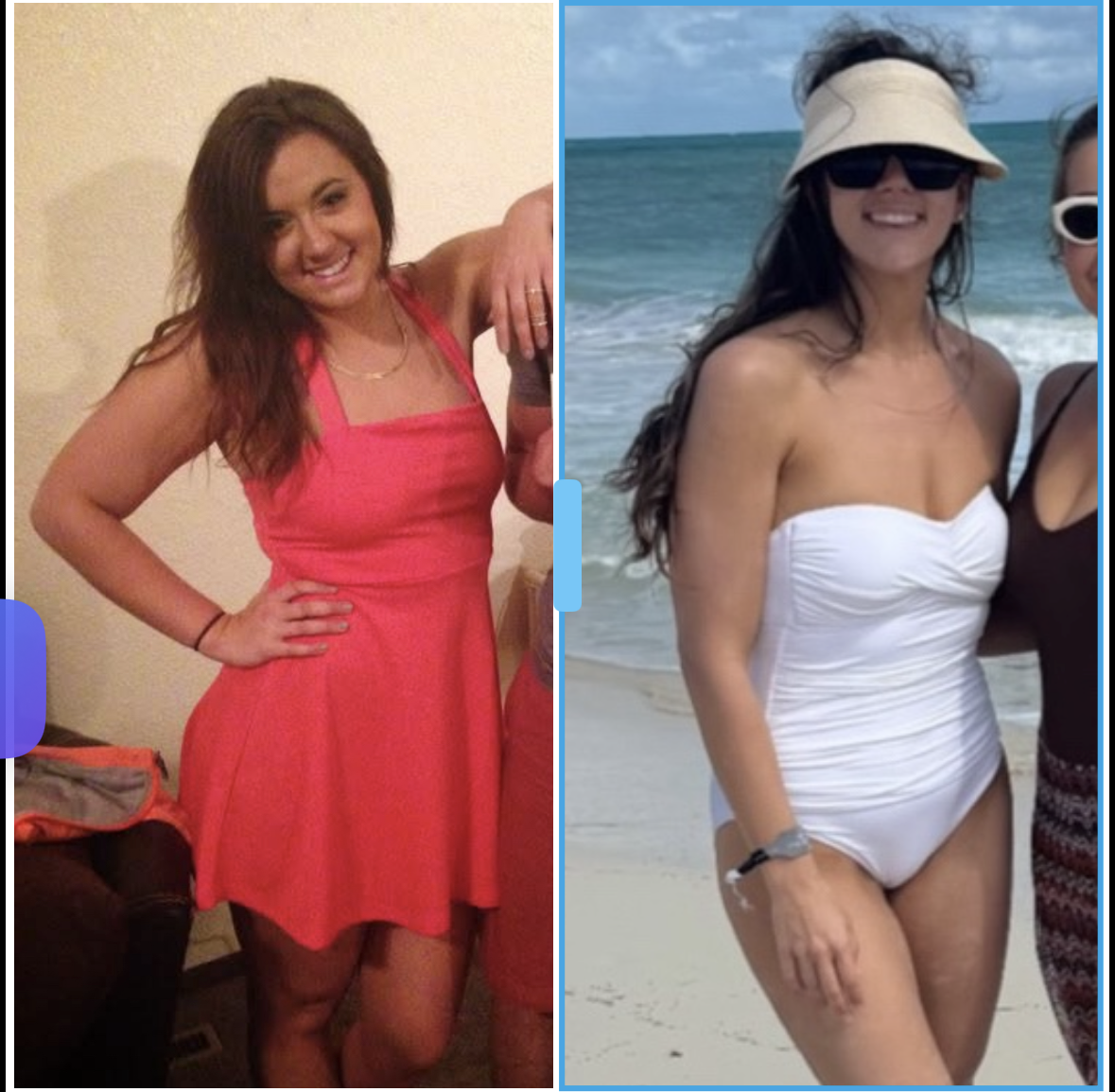
Left: 2014, age 20. Right: 2025, 31 years old and 18 months postpartum!
And funny enough, I naturally lost weight. My chronic dieting and exercise made me puffy, hungry, and inflammed. In fact, the leanest I’ve ever been was 4 months postpartum with my son, breastfeeding and all. I credit the ease of weight loss to my balanced lifestyle and my sharp sense of interoception.
If you haven’t heard of interoception, it’s known as the body’s “6th sense.” It grants us the ability to regulate internal cues such as hunger, fullness, and pain. Dieting teaches us to ignore or bypass these signals, leading to a disconnect of self. (Ps- I talk about the link between disordered eating and interception in my TEDx talk!)
I find myself thinking about this a lot as GLP-1s reshape how people relate to hunger. Food noise doesn’t exist when you eat healthy foods and learn to respond to your appetite. Does it take practice? Yes, but a learning curve isn’t a bad thing.
Most importantly, my journey with poor body image and disordered eating led me to see food and exercise as tools that give me more energy, joy, and inner confidence.
For instance, a I see a banana as a yummy source of quick fuel to power me through a morning workout. Eggs, avocado, and whole grain toast refuel my muscles and iron stores, giving me the energy to chase after my toddler all day without crashing.
Cold watermelon hydrates me. Steak with a potato fills me up so I don’t crave processed foods. Coffee with whole milk adds both protein and creaminess, helping me savor the latte instead of letting it go cold.
Even better, I’m guilt-free when I enjoy ice cream on date night with my husband. How? Because ice cream at sunset at with my guy is part of savoring every juicy moment life has to offer.
And I truly, truly believe you can’t live a full life on an empty stomach.
Today, I’m 32 years old with a wild toddler and another baby boy on the way. I’m also days away from my 9 year anniversary of being a registered dietitian!
And as my journey of body image continues to evolve through pregnancy and motherhood, I’m so grateful for the challenging journey my battle with weight took me on.
Sure, it would have been amazing to have been born with the “skinny gene” or to have never felt victim to unrealistic beauty standards and early 2000’s diet culture.
But without my eating disorder, would I have ever sparked a passion for wellness in the first place? Would I ever develop an obsession with nutrition, leading me to study dietetics in college and become a licensed dietitian? Would I have the same burning passion for helping others improve their relationship to food and body, making it my life’s purpose?
Probably not.
Now, my work with others inspired me to become a keynote speaker, sharing how nutrition is one of our best tools for beating burnout and improving productivity at work. I speak to organizations who want to harness the power of food to improve energy and performance for their teams. It’s the most exciting and fulfilling career- I get to connect with interesting people, make an impact, and go on mini-adventures that don’t burn me out. Plus, speaking on stage gives me confidence no 2 lb weight loss on the scale ever did!
Anyone who has recovered from an eating disorder can attest to a similar shift in perspective. One that is positive and appreciative because without struggle, we never know true peace.
The idea of dieting or restricting becomes simply exhausting, and we’d rather focus our precious energy on more colorful pursuits: scratch cooking muffins, starting a business, meeting friends for matcha and bagels with cream cheese, refurnishing antique furniture, piddling around in the garden. Instead of seeking hacks to make us smaller, we yearn for experiences and skills that make us more interesting, fulfilled people.
So if you’re struggling with weight or body image, here’s the advice I’d give to you if you were my best friend: fighting your body costs you your life, but making peace with food gives it back.
My hope is that no matter where you are on your journey with food and body image that you can learn to feel grateful for the friction as well.
And when you feel like giving up, remember this quote from writer and poet Khalil Gibran:
“Out of suffering have emerged the strongest souls; the most massive characters are seared with scars.”
Your journey with food is making you the best version of you. Keep going.
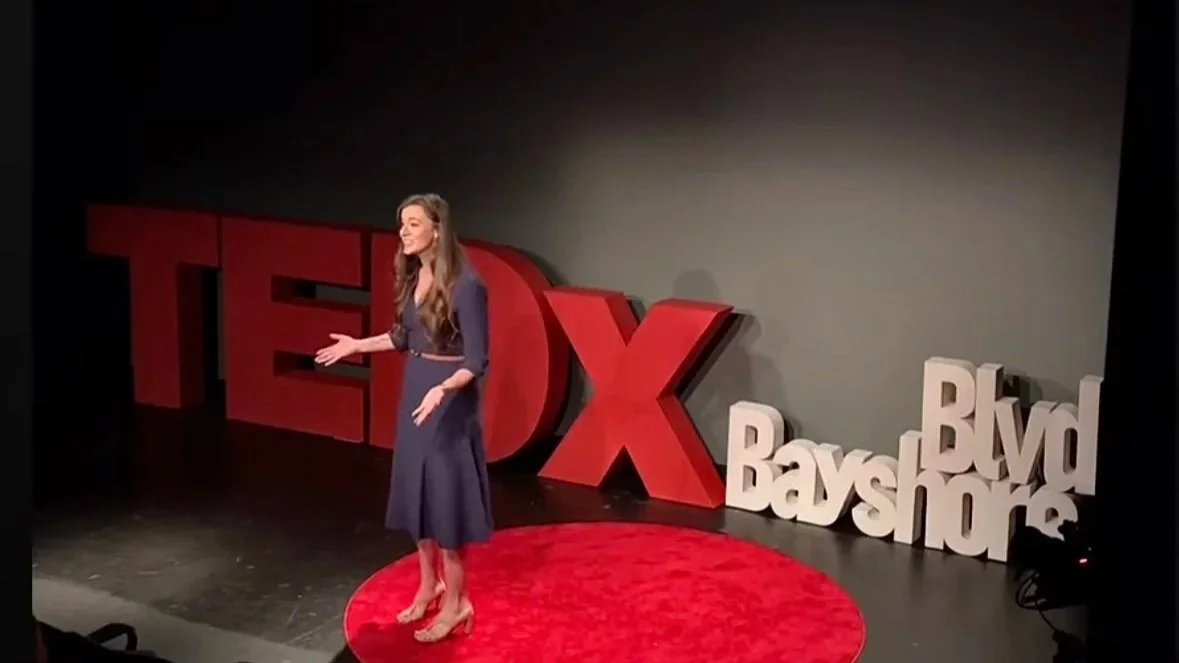
Speaking at TEDx Bayshore BLVD.
If your organization is navigating burnout, energy, or the complicated relationship between wellness and performance, I’d love to bring this conversation to your team. I am available for in persona and virtual speaking events. Connect with me and my team by submitting an inquiry here: www.kaitrichardsonrd.com/contact